Saint Blandina the Confessor of Iași
A survivor of Siberian labor camps, St. Blandina was a humble laywoman in Iași known for her extreme self-denial, profound charity, and dedicated service to the Metropolitan Cathedral.
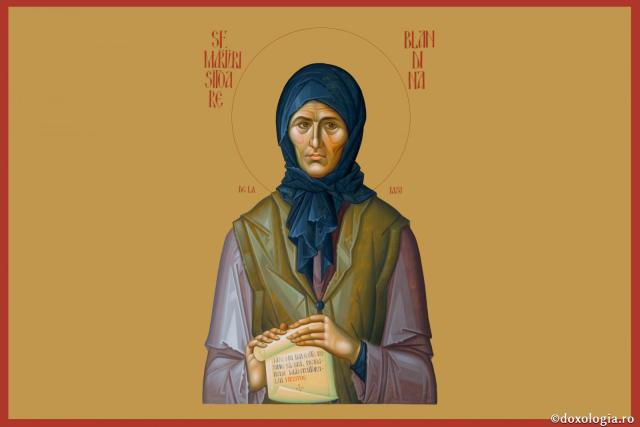
Saint Blandina the Confessor of Iași – A Living Example of Kindness
She was a woman very quick to do good and completely selfless. Once, we met her at a family home in Brașov. She did not stay long, as she was in a hurry to leave. When she went to get dressed, she saw a synthetic overcoat, the kind worn back then, which was quite old and worn out. She asked whose it was, and I told her it belonged to my husband. She took it, put it on to see if it fit, and then said: 'I will take this one, and this one—pointing to a new navy blue one that was hers—you give to the Father. He deserves a new one because he is a priest, and I... I can go with this one.'
I began to insist that she take it off, even pulling at her and crying. Meanwhile, the Father arrived, and despite his insistences, she did not want to take it off, but said to us: 'Leave it as it is, for I was actually ashamed to walk in a new coat while the Father, because he is a priest, wore a worn-out coat!' And she left. That was how she knew how to despise transitory things.
Whenever we went to Iași, we stayed at Aunt Lenuța's (where Aunt Blandina lived). I slept in the same room and the same bed as Aunt Blandina. She would wake up very early in the morning and prepare herself—saying her prayers and leaving for the Metropolitan Cathedral to be there at 6:00 AM when the church doors opened, setting to work cleaning and arranging things for the holy services.
She had the desire to die between Pascha and the Ascension of the Lord, so that 'Christ is Risen!' would be sung for her. She died on May 24, 1971, and May 26 was the Ascension of the Lord. The choir from the Metropolitan Cathedral came and sang 'Christ is Risen!' for her, and her funeral was held on the day of the Ascension. Many people came from the city and from other churches. She was known throughout the city, especially by the intellectual circles; she had colleagues from Bessarabia, doctors, engineers, professors, lawyers... She was buried from the church of Father Laurențiu. My husband was also at the funeral, and in his sermon, he recounted her whole life, how much she had suffered in the labor camps and in Siberia. They were very surprised, as many did not know the history of her life. The whole church was nothing but tears and sighs.
English translation adapted from the Romanian life published by Doxologia.ro.