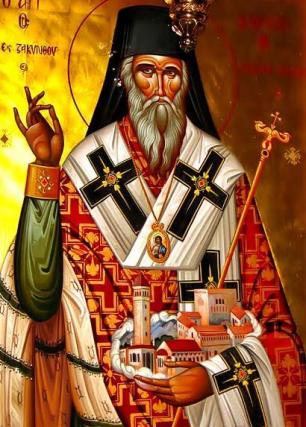
Saint Kyriakos of Tazlău
A 17th-century Moldavian ascetic who lived for 60 years in a cave, eating only roots and water, conquering unseen enemies through constant prayer and profound humility.
If he restrained the gluttony of the stomach, if he did not know the love of silver, if fornication found no dwelling in his body weakened by fasting, if love overwhelmed anger, if the joy of Christ's Resurrection erased sorrow from his life, and if prayer and vigil by day and night defeated sloth, then vain glory, pride, and the adornment of the body found no place in the life of the Venerable Kyriakos of Tazlău.
During the time when Saint Dosoftei was abbot, the one who was to become Saint Kyriakos of Tazlău entered monasticism. He was from the nearby yeoman village of Mastacăn, a village that belongs today to the commune of Borlești.
Although unknown to many who honor the saints, Saint Kyriakos of Tazlău led a distinguished life lived in holiness, gaining the crown of eternal life and the unfading adornment of spiritual victory. The faithful of the nearby regions have preserved their respect and devotion for this chosen vessel and have passed down his name from father to son.
"...he fought greatly against unseen enemies and perfectly conquered them"
In the *Patericon of the Saints of Moldavia*, we read on page 14 about Kyriakos, the Saint of Tazlău: "Likewise at this same time, in the years of 1660, another most venerable father, Kyriakos of Tazlău Monastery, struggled as a hermit. He fought greatly against unseen enemies and perfectly conquered them, and he is commemorated in December, on the 31st day."
At the end of the volume *Lives of the Saints for the Month of December*, Neamț Monastery edition, translated from Russian in 1711, we can read: "Many saints are made in Russia even until today. But there are also many among the Romanians, whose lives and conduct we have seen, though they have not been sought out, except for Daniel of Voroneț and Raphael of Agapia, whose holy relics I have kissed. I have caught in our days fathers high in goodness and conduct and bowed in deep humility: Father Kyriakos of Bisericani, living naked and as a hermit in the mountain for 60 years, and Kyriakos of Tazlău, Epiphanius of Voroneț, Parthenius of Agapia. Also John of Râșca, that holy and wonderful archbishop, Innocent of Probota, and Eustathius."
"His whole life he fed the body only with roots, fruits, and water"
Saint Kyriakos of Tazlău lived on the hill in front of the monastery, remaining in permanent communion with the divine grace that dwelt in his soul at Holy Baptism. He was so pure that he reached the state of a perfect man. He did not choose this life at an advanced age after having known or tasted the sweetness of this passing life, but embraced it from his early youth, like a fool for Christ.
Prayer in the cell was his occupation always. Through it he spoke with God and through it he gained the gifts requested from the Lord, especially the gift of casting out evil spirits. Through prayer in the cell isolated in the forest, Saint Kyriakos uprooted the thorns of the body's passions and removed sorrow, having the Taboric light before him. He did not know discouragement in the struggle with temptations and evil spirits and found high understanding, joy, and temperance—a choice virtue of this venerable father—for local tradition has spoken for over three centuries that throughout his life, which extended to 60 years, he nourished his body only with roots, fruits, and water.
The chosen choir of the hesychasts of Tazlău
If he restrained the gluttony of the stomach, if he did not know the love of silver, if fornication found no dwelling in his body weakened by fasting, if love overwhelmed anger, if the joy of Christ's Resurrection erased sorrow from his life, if prayer and vigil by day and night defeated sloth, then vain glory, pride, and the adornment of the body found no place in the life of the Venerable Kyriakos of Tazlău, for here too local tradition remembers his simplicity and modesty in clothing.
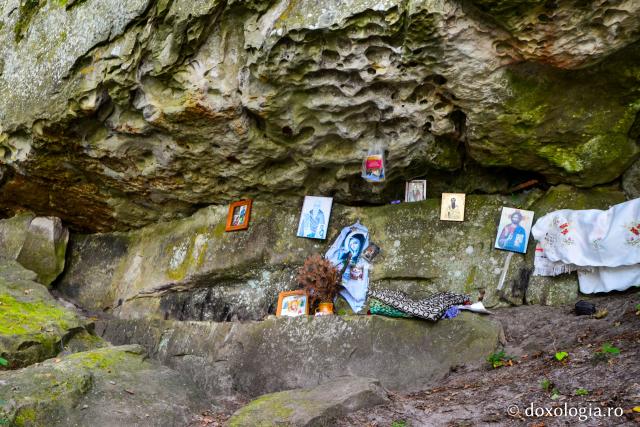
On the Tazlău Hill there still stand today vaulted caves, ruined by time, built into the earth from stone. These are the caves of the great hesychasts: Onuphrius, Seraphim, Job, Agathon, Sylvester, Paul, and Kyriakos. These bear witness to us not only that humble and venerable hermits lived there, praying day and night for the whole world, but that they kept devotion alive, strengthened the faith, and were like pillars of the Church of Christ. Around these cells there would have been small wooden dwellings, modest like their souls, of which time has eroded even the traces, except for those of stone.
Saint Kyriakos, the spiritual beauty of monks and the guide of those who fast
The forest remains, and what has traveled through the centuries is the living memory that the hermit Kyriakos lived there with the chosen choir of hesychasts who, in times of trouble within the nation, kept the spark of faith burning and impressed everyone with their extraordinary lives.
The resting place of Saint Kyriakos is in the porch of the Tazlău Monastery church, on the left side at the entrance. This saint remains the pride of the region and the adornment of Tazlău Monastery, the spiritual beauty of monks and the guide of those who fast.
English translation adapted from the Romanian life published by Doxologia.ro.