Saint Paraskevi the New of Iasi
Born in Epivates in the 11th century, Saint Paraskevi lived as an ascetic in the Jordanian desert before her relics were miraculously discovered and eventually brought to Iasi, Romania, where she works countless miracles.
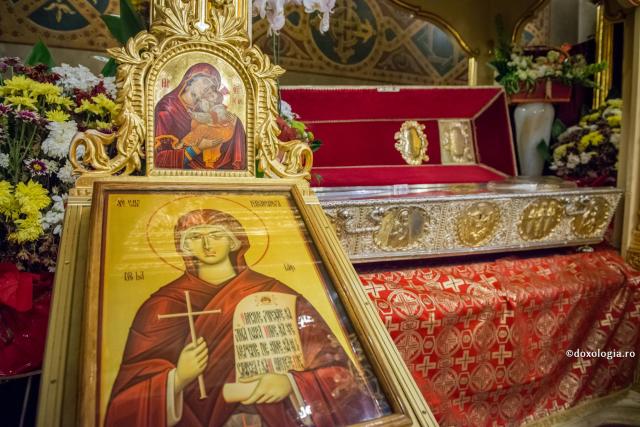
Saint Paraskevi – The Path to Holiness
Following the Lord's calling since childhood, Saint Paraskevi received the gift of tears, praying unceasingly until she reached the age of 25 and passed away in peace to the eternal realms, her body being discovered later through a miracle. Moved to several locations, for over 350 years her relics have resided in Iasi, and every year on October 14, people from all over the country and beyond the borders come on pilgrimage. Saint Paraskevi is known for being a great wonderworker and a quick helper.
Born in the 11th century in Epivates, near present-day Istanbul, Saint Paraskevi was raised with the love of God, having a brother named Euthymius who became a monk and rose to be the Bishop of Madytos. Hearing the Savior's call for her to also step onto the path of monasticism, when she was only 10 years old, she distributed her clothes to the poor and, disregarding her parents' rebukes, followed her heart's longing.
After stopping in several places to learn from skilled monks, she found her place in a monastery in the Jordan Valley, where she remained until the age of 25. Then an angel appeared to her in a dream and commanded her to return to her ancestral lands, so that she might pass in peace to the eternal life. Returning to Epivates without revealing who she was, she prayed with tears that the Lord would take her to Himself, and thus she gave up her soul. Buried as a stranger, her body was found incorrupt later through a miracle. For when a man died on a ship and was thrown by the sea waves onto the shore, he was buried by some believers right next to the grave of Saint Paraskevi. Then the saint, in the form of a queen, appeared in a dream to the man who had dug the grave and to another faithful woman, Euphemia, telling them to place her body in a place of honor.
Placed in the Church of the Holy Apostles in Epivates and performing many miracles, after 200 years, the saint's body was moved to Tarnovo, Belgrade, Constantinople (Istanbul), and then to Romania—first to the Monastery of the Three Holy Hierarchs, where it remained untouched following a fire, and then to the Metropolitan Cathedral in Iasi. The holy relics were offered as a gift by Patriarch Parthenius I of Constantinople, as Prince Vasile Lupu of Moldavia had paid the debts of the Patriarchate.
The Protectress of Moldavia since 1641, Saint Paraskevi intercedes for all those who ask for her help, healing the sick from all over the world and blessing childless families with infants.
English translation adapted from the Romanian life published by Doxologia.ro.