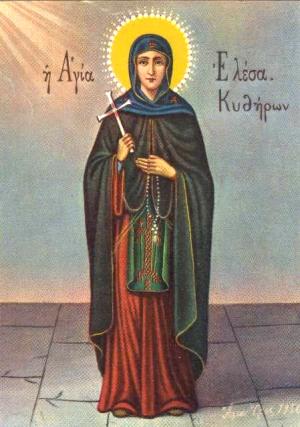
Saint Theodora of Sihla
A 17th-century Romanian ascetic who embraced the eremitic life in the Carpathian Mountains, Saint Theodora became a vessel of prayer and miracles, living in a hidden cave until her holy repose.
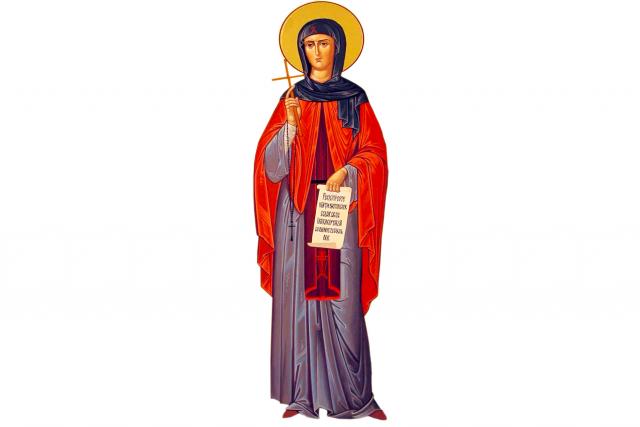
Saint Theodora of Sihla – The Path to Holiness
Deciding with her husband that they should both embrace monasticism, Saint Theodora loved God so much that prayer burned within her heart, and she would rise from the ground during her devotions. Enduring the hardships and temptations of the wilderness, she acquired many gifts, including the gift of tears, and performed miracles.
Born in the 17th century in the village of Vânători, Neamț, Saint Theodora was married against her will to a pious young man from Ismail. Having no children and being consumed by a longing for God, both spouses chose to step upon the monastic path. First laboring in the Skete of Vărzărești, after it was burned by the Turks, the saint withdrew into the nearby forest alongside her superior, Schema-nun Paisia. After the latter’s falling asleep in the Lord, through divine revelation, Saint Theodora moved to the forest around Sihăstria and Sihla, finding her place in a cave given to her by another ascetic.
Spending her time until the end of her life facing trials from demons, she fed only on sorrel, hazelnuts, and wild berries, drank water from a hollow tree, and from time to time, birds would bring her crumbs from the monastery refectory in their beaks. In this way, she acquired the gift of the prayer of the heart and that of tears, performing miracles. When discovered by pagans, she prayed to the Lord to escape them; the rock in the cave cracked open, and the saint took refuge there, escaping death.
Knowing that the end of her earthly life had come, she prayed that the Lord would send her a priest to grant her Holy Communion. At that time, seeing how birds were carrying crumbs deep into the forest, the Abbot of Sihăstria sent two brothers who followed them and found the saint in a fiery light, enveloped in prayer. After confessing and receiving the Holy Mysteries, the saint passed away to the Lord, and her body was buried in the cave.
In the 19th century, however, the Sturza family gave her holy relics to the Kyiv-Pechersk Lavra in exchange for priestly vestments. They are preserved to this day in the catacombs of the monastery there, bearing the inscription 'Saint Theodora of the Carpathians.' The faithful often go to venerate her cave and cell at the Sihla Skete.
English translation adapted from the Romanian life published by Doxologia.ro.