Saint Neophytos the Recluse
A 12th-century Cypriot ascetic and wonderworker who founded the monastery of 'Enkleistra,' known for his profound writings and the miraculous excavation of his cliffside hermitage through divine assistance.
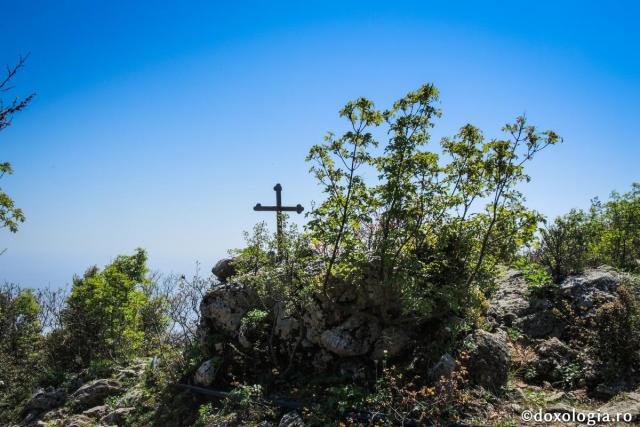
How Saint Neophytos Rebuked the Rock Around the Cave Where He Labored
With prayer, I turned toward the rock and, after sealing it with the sign of the Lord, I spoke to it as to a living being and rebuked it, saying: 'To you I speak, inanimate stone, and I rebuke you by the fearsome name of Christ, at whom all creation—both animate and inanimate—is terrified and trembles as before the Founder and Creator, submitting to Him as a servant. And if all things were made through Him, being bound by His name, stay and do not fall down, nor do any harm.'
Therefore, with prayer, I turned toward the rock and, after sealing it with the sign of the Lord, I spoke to it as to a living being and rebuked it, saying: 'To you I speak, inanimate stone, and I rebuke you by the fearsome name of Christ, at whom all creation—both animate and inanimate—is terrified and trembles as before the Founder and Creator, submitting to Him as a servant. And if all things were made through Him, being bound by His name, stay and do not fall down, nor do any harm.'
After I said these things, I broke the rock with a tool which, meeting no obstacle, cut from top to bottom; and while half of the rock was already hanging outward, the rest was as if nailed into that narrow place, and the power of Christ did not let it move down even a palm’s width. From this fact, I too, gaining divine courage, broke the other rock. It also held above the other, and after I broke the third, it too held by the grace of Christ. I rejoiced greatly and gave glory to God. I called the brothers and they came with rope; and after I tied the first rock that was hanging outward, I shattered the others and threw them away. In this way, a little space was created, and I continued digging. But because I encountered a hard rock that would not break, and because the time of the holy days of fasting had already arrived, we stopped until the divine Pascha.
Above, there was another rock that threatened to fall and cause great damage to the buildings below. It was out of the question to bring it down from that height, so I built a wall and a fortification from below and supported it in this way. In the northern part, there were several unkempt and difficult corners, and I decided it was not good to leave them so. I began the cutting of the cave on a special day, June 24, the Nativity of the Honorable Forerunner. Rejoicing, I said then: 'I shall call this cleft the Cave of the Prodromos.' After a few days, while digging, I found three letters skillfully carved on a stone: K + X. The first was Kappa, the second was a cross (+), and the third was Chi (X). We marveled at this and considered it a good sign. To me, these letters signified the Cross of the Lord and the Hand of the Lord. For it was the hand of the Lord that protected us through the Cross from the machinations of Satan, and helped us, and resolved our difficulties.
After a few days, where I was digging, I found two more letters, I and P, which clearly mean Ioannis Prodromos (John the Forerunner), to whose name the cave was dedicated, and his holy icon was painted therein. The stones with the letters were used in the construction of the walls. Thus, with the help of God, this cave was also finished.
English translation adapted from the Romanian life published by Doxologia.ro.