Saint Paraskevi of Rome
Born in 2nd-century Rome, Saint Paraskevi was a monastic who converted many through her miraculous survival of tortures, including healing the Emperor Antoninus of blindness, before being martyred by the sword.
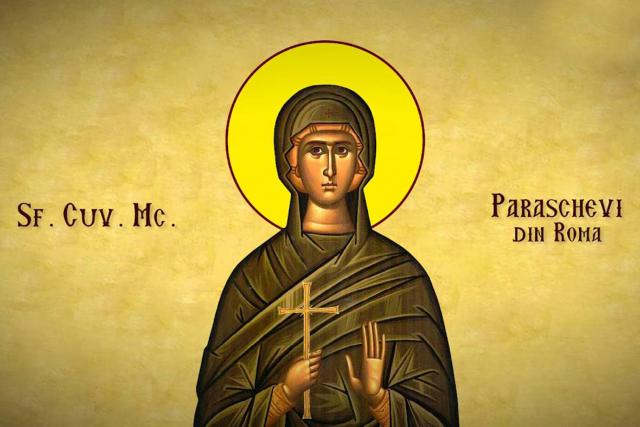
Saint Paraskevi of Rome – The Path to Holiness
Preserved unharmed through many torments, Saint Paraskevi succeeded in converting her tormentors to the true faith, even healing the emperor who had been struck blind. However, a later governor struck off her head with a sword, and the saint received the crown of martyrdom.
Born in the 2nd century in a village of old Rome, Saint Paraskevi came into the world as a result of the prayers made by her childless parents. She received this name, which in Greek translates to "Friday," as it was the day on which she was born, and she was taught all the mysteries of the faith by her mother. Spending most of her time in the Church, she chose to embark on the monastic path after the death of her parents.
Accused by certain Jews before Emperor Antoninus for preaching Christ, Saint Paraskevi was threatened by him that if she did not submit, she would be tortured at length. Fearless, the virgin refused, and a red-hot iron helmet was placed on her head; she was then thrown into a cauldron of boiling pitch and oil, but divine dew preserved her. Because of this miracle, many believed in God.
The emperor, lacking faith, asked her to sprinkle him with the pitch from the cauldron; when the saint did so, the unbelieving ruler went blind. The emperor then promised to convert if she healed him, and through the saint's prayers, he regained his sight and was baptized with his entire household.
Continuing her preaching, the saint arrived in a city where Asclepius was governor. He sent her to a dragon to be devoured, but the dragon died, leading the governor and others to convert to the true faith. Finally, the saint gave her soul into the hands of the Lord after many tortures at the hands of the governor Tarasius, who beheaded her with a sword.
In our days, her holy relics, which heal diseases, are found in the church dedicated to her in the Tempi Valley, Greece. Portions of her holy relics are also found at the Antim Monastery in Bucharest.
English translation adapted from the Romanian life published by Doxologia.ro.