Saint Paulinus the Merciful, Bishop of Nola
A Roman senator who renounced his wealth for Christ, Saint Paulinus became Bishop of Nola and famously sold himself into slavery to ransom a widow's son from the Vandals.
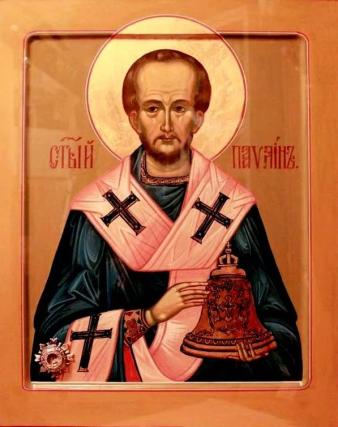
The Life of Saint Paulinus the Merciful, Bishop of Nola
Saint Paulinus is known both as a founder of churches and as a Christian poet.
Saint Paulinus the Merciful, Bishop of Nola, came from a wealthy aristocratic family in Bordeaux, France. Due to his excellent education, the twenty-year-old was elected a Roman senator, later becoming consul and finally governor of the Campania region in Italy.
At the age of twenty-five, he and his wife were converted to Christ and received baptism. After this moment, he completely changed his way of life: he renounced all his possessions and distributed the money to the needy, for which he endured the contempt of his friends and servants.
Having no children, the pious couple adopted poor orphans, raising them in the fear of God. After a time, seeking a secluded life, Saint Paulinus went to Spain, to Barcelona.
News of his ascetic life spread quickly, and in the year 393, he was proposed for ordination to the priesthood. Shortly thereafter, he left Spain and headed for the city of Nola in Italy, where he was elected bishop.
When the Vandals invaded Italy and took many people into slavery, taking them to Africa, Saint Paulinus used church funds to ransom those held captive. However, he did not have enough money to free the son of a poor widow who was held in slavery in the house of the Vandal leader's son-in-law. Thus, he offered himself to take his place. Dressed as a slave, Saint Paulinus began to serve the Vandal prince, working as a gardener.
Before long, his identity was discovered through a dream given to King Gaiseric. Saint Paulinus not only regained his freedom but also obtained the release of all the other prisoners from Campania.
Saint Paulinus is known both as a founder of churches and as a Christian poet. Among his many virtues, his love for people and compassion for the poor and needy deserve special mention. He passed away at the age of seventy-eight on June 22, 431. Thirty-two of his poems and fifty-one of his letters have been preserved, containing various moral teachings filled with deep piety.
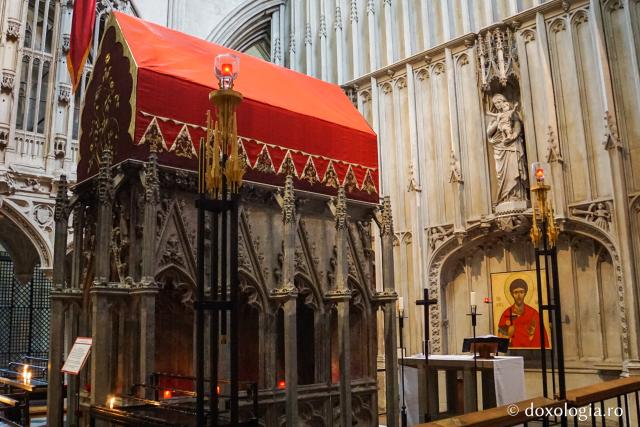
His holy relics are located in Rome, in the Church of Saint Bartholomew the Apostle.
English translation adapted from the Romanian life published by Doxologia.ro.